YERIMA ACTED WITHIN THE LAW TO STOP WIKE:
The Legal Limits of Government Power and the Right to Defend Property in Nigeria
Introduction
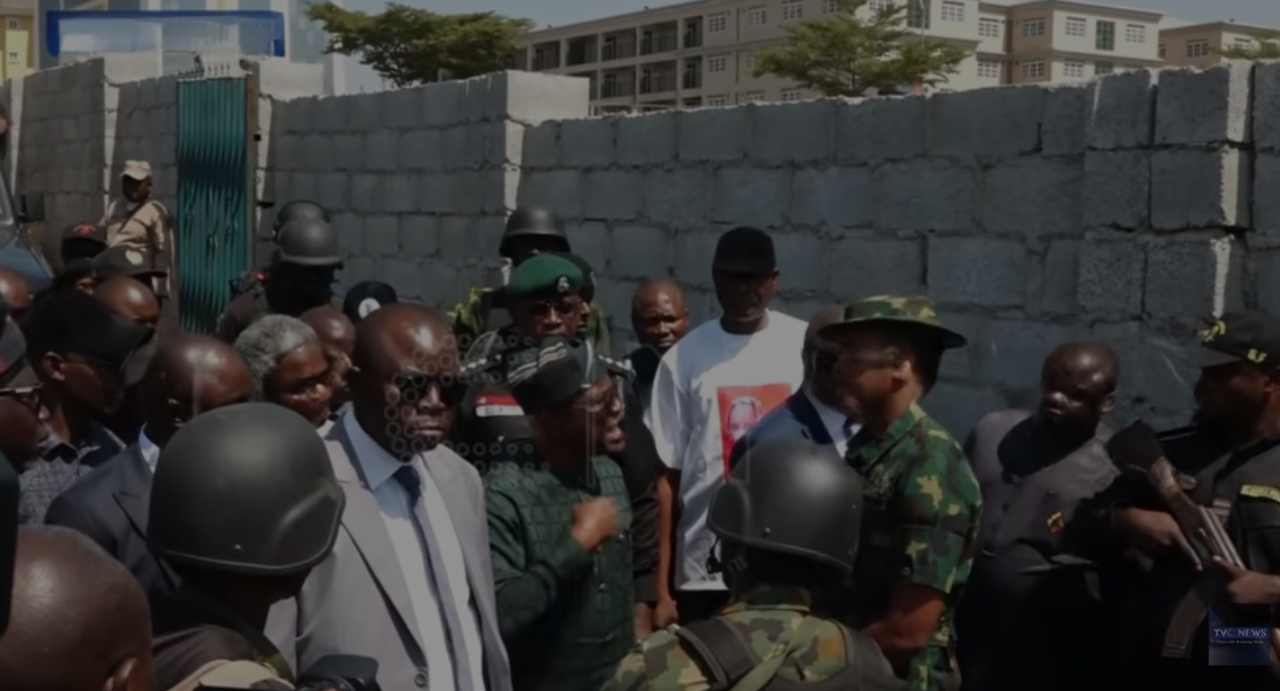
The recent confrontation between the FCT Minister, Nyesom Wike (Wike/the Minister), and Lt. Ahmed Yerima, acting as private security aide, during an attempted demolition in Abuja, raises questions about the lawful limits of executive power, rights of property owners, and legality of resisting unlawful government action.
It has been argued that Wike acted within his rights as provided by Section 11 of the Land Use Act which empowers the governor of a state (and with respect to the FCT, the Minister) to enter upon land for inspection. However, this power is limited to inspection only at reasonable hours — not demolition, forced entry, or seizure.
Facts in the public domain suggest the Minister was not merely inspecting the property, but seeking to enforce a controversial demolition or takeover. The presence of bulldozers supports this view. There are also allegations that the initial revocation of the property was unlawful and possibly politically motivated.
Where the Minister’s Visit Exceeded “Inspection”
While the Minister can stop work or order demolition in lawful circumstances, the law requires strict procedures. Under the Nigerian Urban and Regional Planning Act (NURPA), 1992:
- A Contravention Notice must be served (Section 57(2)).
- If the breach continues, a Stop-Work Notice must be issued.
- Only after due process can a Demolition/Removal Notice be served.
- Personal service or conspicuous posting is required.
- The owner has rights to administrative review and appeal.
Courts have ruled that demolition without proper notice is unlawful. In Ononuju v A-G Anambra State (2009), the court held that demolition done without personal service is illegal, as Section 44 of the Land Use Act mandates proper notice before revocation or demolition.
Section 11 of the Land Use Act Cannot Defend a Demolition Attempt
If the Minister was present for anything beyond inspection, Section 11 cannot protect his actions. The owner or occupier may legally resist entry unless due process for revocation, notice, and compensation has been followed.
Sections 28 and 38 of the Land Use Act allow revocation only for overriding public interest and only through strict procedures. Any attempt to demolish or take possession while litigation is ongoing or procedures are ignored is unconstitutional.
Self-Help Can Be Lawful: Defending Property from Unlawful Government Trespass
While citizens should approach the courts to resolve disputes, the law recognises the right to defend property from unlawful intrusion.
Section 33(2)(b) of the Constitution allows the use of reasonable force in defence of property — even if such force may lead to the death of the intruder in extreme cases. This exists to prevent irreversible damage before the courts can intervene.
Yerima’s Intervention Was Lawful
Although soldiers are primarily tasked with defending Nigeria’s territorial integrity, the Armed Forces Act (Sections 18, 20, 22, 26 and 283) and Section 218 of the Constitution empower Service Chiefs to issue postings and directives within military command.
Therefore, where an officer is officially posted as a security aide, such assignment is lawful. Lt. Yerima was acting on superior orders. Any concerns should have been addressed to the officer’s superior, not the officer himself.
Conclusion
Citizens are not required to submit to unlawful demolition, seizure, or abuse of state power. Government officials must obey the Constitution, the Land Use Act, and due process at all times.
When the rule of law is undermined, society loses its foundation. Both the government and citizens must uphold legal and constitutional boundaries to prevent abuse.
By: Sam Akpologun FCIM, CMC
Principal Partner, Ace & Vanguard Legal Practitioners
Executive Director, Open Society on Justice Reform Project (OSJRP)